
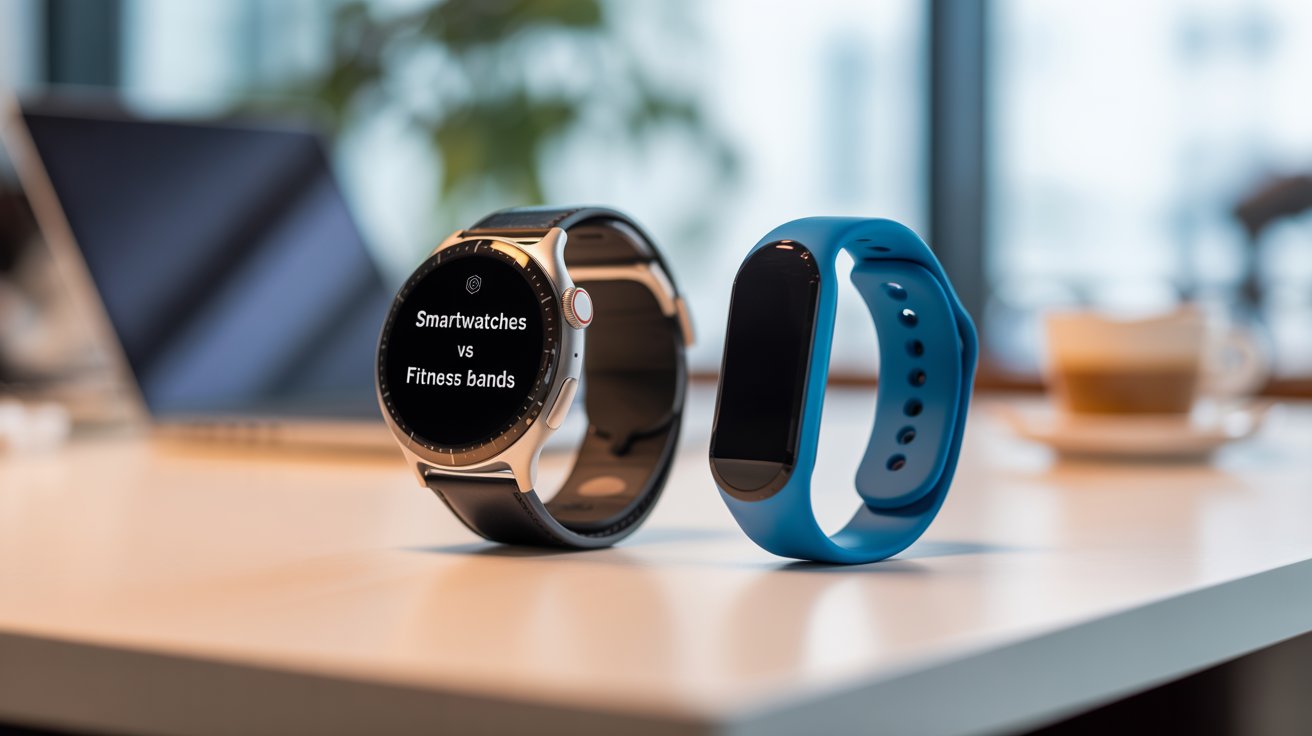
Smartwatches vs Fitness Bands in 2026: Which Fits Daily Life Better?
This guide compares smartwatches and fitness bands in 2026, If you’re looking for a fitness machine then this article helps you alot.
Whether you’re a professional juggling notifications, a gamer tracking activity between sessions, or someone aiming to stay active, we’ll explore functionality, comfort, and value to help you pick the wearable that best fits your daily life.
In 2026, smartwatches and fitness bands serve overlapping yet distinct roles. Smartwatches, like the Apple Watch Series 10 and Samsung Galaxy Watch 7, act as smartphone extensions with apps, calls, and advanced health tracking, ideal for tech-heavy users needing connectivity and style.
Fitness bands, such as the Fitbit Charge 6 and Xiaomi Smart Band 9, focus on health metrics, long battery life, and affordability, perfect for fitness-focused users or minimalists. This guide compares features, design, and cost to determine which suits daily life better.
Functionality and Features
Smartwatches
- Core Features: Act as wrist-bound smartphones with Wear OS (e.g., Galaxy Watch 7) or watchOS (Apple Watch). Support apps (WhatsApp, Spotify), notifications, calls, and voice assistants (Siri, Google Assistant). Features like ECG, blood oxygen, and sleep apnea tracking are standard on flagships.
- Health Tracking: Comprehensive metrics including heart rate, GPS, sleep, stress, and workout modes (100+ on Galaxy Watch 7). Advanced tools like Fitbit’s Daily Readiness Score (Pixel Watch 3) or Garmin’s Body Battery offer personalized insights.
- Daily Life Fit: Ideal for managing emails, texts, and smart home devices during work or gaming breaks. Safety features like fall detection (Apple Watch Ultra 2) and Loss of Pulse (Pixel Watch 3) add value for solo activities. Drawback: Overkill for users who don’t need app integration.
- Examples: Apple Watch Series 10 ($399, 36-hour battery), Samsung Galaxy Watch 7 ($299, 30 hours), Google Pixel Watch 3 ($349, 36 hours).
Fitness Bands
- Core Features: Focus on health and fitness with basic smart features (notifications, music control). Devices like Fitbit Charge 6 offer Google Pay and limited app support, but lack full app ecosystems. Xiaomi Smart Band 9 prioritizes metrics over smart functions.
- Health Tracking: Match smartwatches in core metrics (steps, heart rate, sleep, calories). Fitbit Inspire 3 and Amazfit Band 7 provide accurate sleep and heart rate data, with 150+ workout modes on some models. No advanced features like ECG or blood pressure on budget bands.
- Daily Life Fit: Streamlined for fitness goals, reminding you to move or tracking sleep without notification overload. Perfect for minimalists or those avoiding smartphone distractions. Drawback: Limited smart features and smaller screens reduce versatility.
- Examples: Fitbit Charge 6 ($150, 7 days), Xiaomi Smart Band 9 ($49, 21 days), Amazfit Band 7 ($50, 18 days).
Verdict: Smartwatches excel for connectivity and multitasking, while fitness bands prioritize focused fitness tracking and simplicity.
Design and Comfort
Smartwatches
- Build: Larger (40–49mm), often with premium materials (aluminum, titanium, stainless steel). Apple Watch Series 10 is thinner (9.7mm) and lighter (31g without band) for all-day wear. Customizable bands (silicone, leather, metal) suit work or casual settings.
- Display: AMOLED screens (e.g., 1.45-inch on Pixel Watch 3) are bright (up to 3,000 nits) and responsive, ideal for notifications and apps. Always-on displays drain battery faster.
- Comfort: Comfortable but bulkier than bands, noticeable during sleep or workouts. Models like Garmin Venu 3 balance style and wearability. Concern: Some bands (e.g., Apple’s Sport Band) contain PFHxA, a “forever chemical.” Opt for silicone or leather.
- Daily Life Fit: Stylish for meetings or gaming setups, but bulk may annoy during intense activity or sleep.
Fitness Bands
- Build: Slimmer (e.g., Fitbit Inspire 3, 10.5mm thick, 17g) with lightweight TPU or silicone bands, designed for 24/7 wear. Less fashionable but discreet. Withings ScanWatch Light offers a hybrid analog look for dressier settings.
- Display: Smaller AMOLED or TFT screens (e.g., 1.62-inch on Xiaomi Smart Band 9, 1,200 nits). Clear for metrics but cramped for notifications. Some lack touchscreens (e.g., Whoop 5.0, no display).
- Comfort: Barely noticeable, ideal for sleep, workouts, or desk work. Fitbit Luxe’s stainless steel case adds a premium feel without weight. Drawback: Rubber straps may irritate sensitive skin post-workout.
- Daily Life Fit: Perfect for all-day wear, especially for fitness-focused users who don’t need a flashy design.
Verdict: Fitness bands win for comfort and discretion, while smartwatches offer style and larger displays.
Battery Life
Smartwatches
- Duration: Typically 1–2 days. Apple Watch Series 10 and Pixel Watch 3 last ~36 hours, Galaxy Watch Ultra up to 3 days with AOD. Garmin Fenix 8 extends to 14 days with MIP display, but AMOLED models drop to 7–10 days.
- Charging: Fast charging (e.g., Apple Watch 10, 80% in 30 mins) mitigates short battery life, but daily charging disrupts routines.
- Daily Life Fit: Suitable for tech-heavy users who don’t mind nightly charging, but inconvenient for travel or outdoor activities.
Fitness Bands
- Duration: 6–21 days. Xiaomi Smart Band 9 lasts 21 days, Fitbit Charge 6 ~7 days, Amazfit Band 7 ~18 days. Lack of power-hungry apps extends battery.
- Charging: Slower (1–2 hours for full charge), but infrequent charging suits busy schedules.
- Daily Life Fit: Ideal for minimal maintenance, especially for users who forget to charge or travel frequently.
Verdict: Fitness bands dominate for long battery life, while smartwatches require more charging discipline.
Price and Value
Smartwatches
- Pricing: $199–$1,200. Budget options like Galaxy Watch FE ($199) to premium Garmin Fenix 8 ($1,100). Apple Watch SE ($249, often $149 on sale) is a value pick.
- Value: High upfront cost but versatile for work, fitness, and entertainment. Long-term software updates (4–7 years) and resale value add durability. Drawback: Features may be redundant for fitness-only users.
- Example: Galaxy Watch 7 ($299) offers sleep apnea tracking and Wear OS apps, outpacing budget bands in functionality.
Fitness Bands
- Pricing: $50–$250. Xiaomi Smart Band 9 ($49) and Fitbit Inspire 3 ($100) are budget-friendly, while Withings ScanWatch Light ($249) adds hybrid style.
- Value: Affordable, with core fitness tracking rivaling smartwatches. Subscriptions (e.g., Fitbit Premium, $9.99/month) may add costs for full features. Shorter software support (2–4 years).
- Example: Amazfit Band 7 ($50) delivers 150+ workout modes and 18-day battery, matching pricier bands.
Verdict: Fitness bands win for affordability, while smartwatches offer broader functionality for the price.
Daily Life Scenarios
- Workday Productivity:
- Fitness and Health:
- Social and Entertainment:
- Travel and Minimalism:
Tips for Users
- For Smartwatches:
- For Fitness Bands:
- General:
Why Choose One Over the Other?
- Pick a Smartwatch if you want a versatile device for notifications, apps, and advanced health tracking. Ideal for tech enthusiasts, professionals, or gamers needing connectivity, with style for work or social settings. The Samsung Galaxy Watch 7 ($299) balances cost and features for Android users.
- Pick a Fitness Band if you prioritize fitness, long battery life, and affordability. Perfect for minimalists, casual athletes, or those avoiding smartphone distractions, with discreet comfort for all-day wear. The Fitbit Charge 6 ($150) offers robust tracking and smart features.
- Unique Angle: Smartwatches are like a Swiss Army knife—multifunctional but complex. Fitness bands are like a trusty pedometer—simple, focused, and reliable. Your choice depends on whether you want a connected hub or a fitness-first companion.
What’s Next for Wearables in 2026?
- Smartwatches: Expect Apple Watch Series 11 and Galaxy Watch 8 with enhanced AI (e.g., improved Siri, Samsung’s Wellness Tips). Blood pressure monitoring may arrive on Apple models.
- Fitness Bands: Fitbit Charge 7 may launch with GPS and refined sensors. Budget brands like Amazfit and Xiaomi will push smarter features at low prices.
- Stay Updated: Follow @xeetechcare or @TheTechOutlook on X for wearable deals and updates.
FAQs | Smartwatches vs Fitness Bands
Which is better for fitness tracking in daily life?
Fitness bands like Fitbit Charge 6 offer accurate steps, sleep, and workout tracking with longer battery life, ideal for casual fitness. Smartwatches like Garmin Venu 3 add advanced metrics (Recovery Time) for serious athletes.
Do smartwatches or fitness bands last longer?
Fitness bands last 6–21 days per charge (e.g., Xiaomi Smart Band 9, 21 days), while smartwatches typically last 1–3 days (e.g., Apple Watch 10, 36 hours). Bands suit low-maintenance users.
Which is more affordable for daily use?
Fitness bands start at $50 (Amazfit Band 7), offering great value for fitness tracking. Smartwatches start at $199 (Galaxy Watch FE), but sales (e.g., Apple Watch SE at $149) improve affordability.
Are smartwatches better for notifications?
Yes, smartwatches handle texts, emails, and apps (e.g., WhatsApp on Pixel Watch 3) with larger screens, while fitness bands offer basic notifications on smaller displays.
Which is more comfortable for all-day wear?
Fitness bands are lighter and slimmer (e.g., Fitbit Inspire 3, 17g), ideal for sleep and workouts. Smartwatches are stylish but bulkier, better for work or social settings.

Hey, My Name Is Sahitya Porwal Founder of IconicTechs. I Love To Share Information and Create Content About Gaming & Technology.