

No Cheap Plans Left? Jio and Airtel Users Frustrated With High Recharges
Hey there, fellow Indians!
In recent years, mobile recharge prices in India have gone up again.
Both Jio and Airtel have increased their tariffs, and the biggest problem for many people is that there is no simple recharge plan without heavy internet data.
For people who already have a good WiFi connection at home, this change feels unnecessary. We are forced to pay for internet data that we don’t even use.
No more 1GB data options that actually make sense, and forget about plans without any data bundled in.
As someone who’s dabbled in digital marketing and relies heavily on my home WiFi, this whole situation has me scratching my head.
If you’re anything like me, you’ve probably felt that familiar sting in your wallet every time you recharge your mobile SIM.
Just when we thought telecom prices had stabilized, boom – Jio and Airtel hit us with another round of hikes.
It’s 2026, and suddenly, finding a simple, budget-friendly plan feels like hunting for a needle in a haystack.
Why force-feed us data we don’t need?
Let’s dive into this mess, break it down, and talk about why it’s time for these giants to listen to everyday folks like us.
The Missing Small Plans in India
About seven years ago, before Jio entered the market, mobile recharges were much simpler.
With just ₹100, a SIM card could remain active for almost a year.
People who didn’t talk much on calls or didn’t need much internet were happy with those small plans.
Today, things are very different.
The minimum recharge plan is around ₹239, and it only lasts for 22 to 28 days.
This means even if you don’t need data, you still have to recharge at a high cost just to keep your number active.
What’s Happening with Jio and Airtel?
Jio and Airtel have bumped up their tariffs yet again.
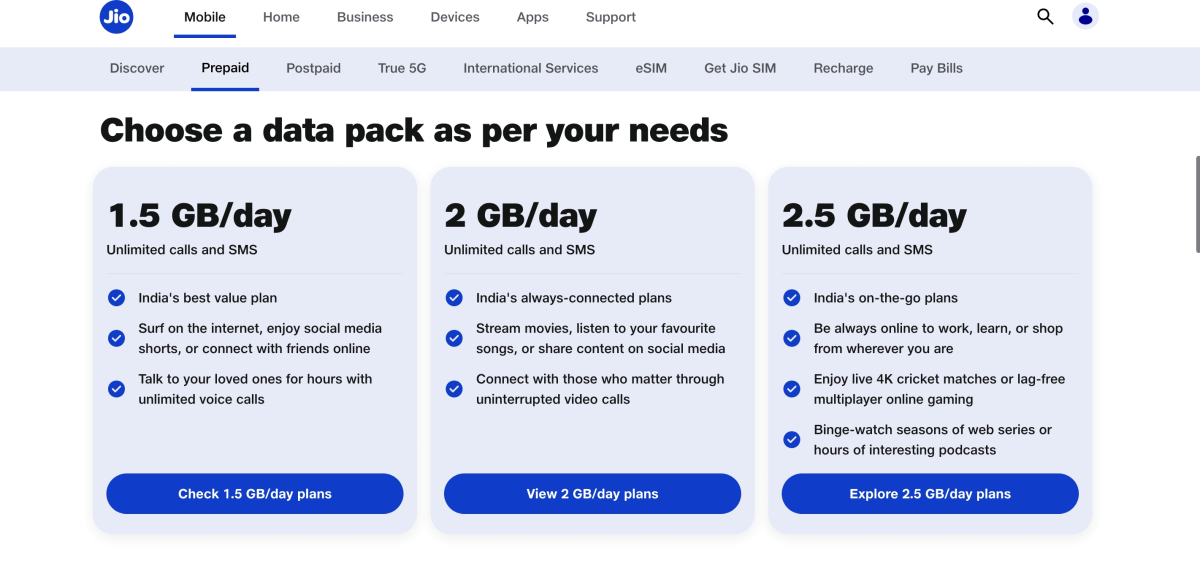
For Jio, the entry-level plans that used to hover around Rs 150-200 are now starting at Rs 239 for the bare minimum.
Airtel isn’t far behind, with their basic unlimited voice packs kicking off at around Rs 249.
And here’s the kicker:
These aren’t just any recharges; they’re loaded with data – 1.5GB per day or more – whether you want it or not.
The companies cite rising operational costs, network upgrades for 5G, and the need to invest in better infrastructure.
Fair enough, right?
But the real frustration kicks in when you realize there’s no flexibility.
Gone are the days of picking a plan that fits your life.
If you’re a light user, tough luck.
No standalone voice-only plans, no skimpy data bundles like 500MB or 1GB for those occasional outings.
Everything’s bundled, and it’s all or nothing.
I remember checking my app recently, scrolling through options, and thinking, “Where’s the plan for someone who just needs to keep their number active?”
Turns out, to even make calls or send SMS, you need at least that Rs 239 pack, which lasts a measly 22-28 days depending on the provider.
Miss a recharge?
Your SIM goes inactive, and you’re back to square one.
It’s like they’re saying, “Pay up or get out.”
Remembering the Good Old Days
Let’s take a trip down memory lane, shall we? About seven years ago – before Jio disrupted the market in 2016 – things were simpler.
Back then, a Rs 100 top-up could keep your SIM alive for an entire year.
No frills, no unlimited calls, just enough validity to receive incoming calls and stay connected. It was perfect for people like my grandparents or even me during my early freelancing days.
Why did it work? Because not everyone is glued to their phone 24/7.
If you’re a digital marketer like I am, you’re probably parked in front of your laptop all day, connected to rock-solid WiFi. Calls?
Maybe a few client check-ins. Data? Zilch on mobile – everything streams through broadband.
And honestly, most households in urban India (and even many rural ones) have WiFi these days.
According to recent stats, over 50% of Indians have home broadband, making mobile data a backup rather than a necessity.
But oh, how times have changed. Jio’s entry brought free data and calls, which was revolutionary at first.
It democratized the internet, no doubt. Yet, in the process, the old-school validity extenders vanished.
Now, companies bundle everything together, forcing you to pay for data you might not use. It’s like buying a full meal when all you want is a cup of tea.
And for what? To boost their average revenue per user (ARPU), of course.
But at whose expense?
Who Gets Hit the Hardest?
This isn’t just about numbers on a bill – it’s about real people feeling the pinch.
Take me, for instance.
As a digital marketer, my workday revolves around emails, social media management, and content creation – all via WiFi.
When I step out for a quick errand, sure, I might need a bit of data for maps or a WhatsApp call. But 1.5GB a day?
That’s overkill.
I’d be thrilled with a 500MB or 1GB pack, or even better, a no-data option that just lets me call or text without the extras.
And it’s not just professionals like us.
Think about the elderly – my grandparents,
for example.
They’re in their 80s, living a quiet life. They make maybe one or two calls a week to check on family, and that’s it. No streaming, no social media scrolling.
Yet, to keep their SIM from deactivating, we have to shell out Rs 249 every month.
That’s Rs 3,000 a year going down the drain for something they barely use! With WiFi at home handling any occasional browsing, why can’t there be a cheap validity extender?
It’s wasteful, frustrating, and feels downright unfair.
Then there’s the broader crowd – students, homemakers, or anyone on a tight budget. In a country where millions still juggle finances, these hikes add up.
A recent survey showed that over 60% of users feel telecom costs are rising faster than their incomes.
And with no low-data alternatives, people are left choosing between overpaying or switching to secondary SIMs, which just complicates things further.
Why do companies do this?
Simple economics, they say.
Bundling pushes data usage, which in turn justifies more infrastructure spending. But it ignores a huge segment of users who aren’t data hogs.
It’s like they’re making fools of us by assuming everyone lives the same hyper-connected life. News flash: We don’t.
What Users Really Want?
Alright, enough venting – let’s talk solutions. Telecom companies, if you’re listening (and I hope you are), here’s what users like us are begging for:
- Bring Back Low-Data or No-Data Plans: Introduce options with 500MB to 1GB data, or purely voice/SMS packs. Make them affordable, say Rs 50-100 for a month’s validity. Perfect for WiFi-dependent folks who only need mobile as a safety net.
- Revive the Top-Up System: Remember those old top-ups that extended validity without bundling extras? Bring ’em back! Let us add Rs 100 for three months of incoming calls, no strings attached.
- Longer Validity for Minimal Users: For seniors or occasional callers, offer annual plans under Rs 500. It keeps numbers active without monthly hassles.
- Flexible Customization: Use apps to let users mix and match – add data only when needed, or opt for call-only modes.
Regulators like TRAI could step in too, pushing for more consumer choice.
And as users, we can voice our concerns on social media, forums, or even petitions.
Imagine if thousands of us shared stories like my grandparents’ – it could spark real change.
It’s clear that the current recharge system in India doesn’t suit everyone. While heavy data users may benefit, people who only need calls or minimal usage are left with no choice but to spend extra money.
Telecom companies must listen to their customers. If Jio, Airtel, or other providers introduce cheaper, no-data plans, it will help millions of users—especially the elderly, students, and WiFi users who just want their numbers active without wasting money.
Until then, many will continue to feel that they are being forced into unnecessary expenses.
👉 What do you think? Should Jio and Airtel bring back simple calling plans without internet?
Share your opinion—it’s time these companies hear the real voice of their customers.

IconicTechs Is A Problem-Solving Community Where We Provide Top-notch solutions to your Tech Problem.